
I’m Rarely Thriving When... Comparing Who I Am Today with Younger Versions of Myself
Meet David, the psychologist and disabled writer behind the Substack Cracked Open.

David B Younger shares how living with a progressive and degenerative form of muscular dystrophy has shaped his life. Here he discusses childhood, relationships, parenting, and moving through shame.
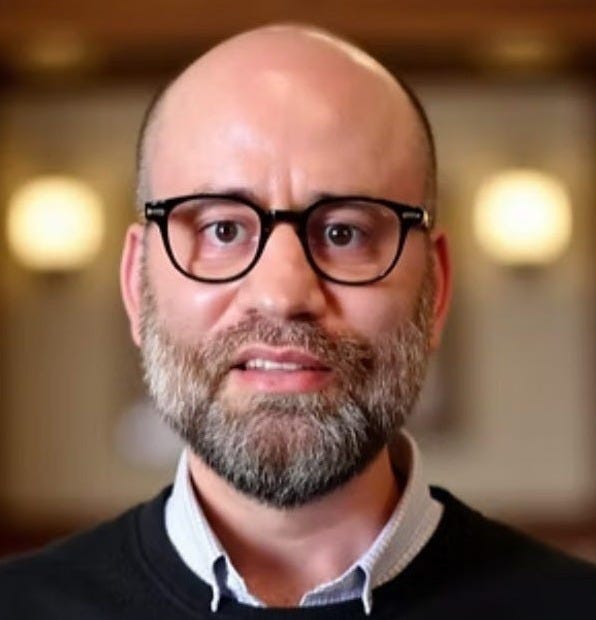
It's a sweltering 32 degrees Celsius when I fire up my laptop here in Bristol, UK, to meet with 50-year-old psychologist David, who joins me on Zoom from his home in Austin, Texas. David has fascioscapilohumeral muscular dystrophy (FSHD), a dominant genetic disorder. FSHD is present at birth and causes progressive muscle weakness over time.
There are two types of FSHD. In most cases, symptoms appear in early adulthood, though rarely, early onset FSHD can appear in childhood. According to the Muscular Dystrophy Association FSHD affects around 1 in every 8000 people and primarily impacts the face, shoulder blades, and upper arms, but can affect the whole body.
Speaking candidly of his formative years, David, who is originally from New York, tells me his symptoms were mild enough growing up that he was able to live a relatively active life. “I had some scapular winging that was noticeable in childhood, and my eyes do not close all the way when I sleep”, both of which are early signs of the condition in children. David explains both his mother and grandmother also had FSHD. There's around a 50% chance a child will inherit if a parent has it1.
“As far as I can remember, I knew I had it and I knew my mom had it but I compartmentalised it and tried to act normal.”
As a child and young adult, David says watching his mother deteriorate, knowing he could also become progressively ill, was painful and conflicting. He says he subconsciously blocked out his feelings and did not discuss his diagnosis with school-friends or teachers. He also notes it was rarely talked about at home.
“They [my parents] weren’t going to tell me I had it until it became obvious or I asked. My dad didn’t even realise I knew I had it as a kid!” Says David. His parents ultimately followed his lead and tried to provide him with as “normal” a childhood as possible. He does remember his mom trying to discuss it with him occasionally but his own need to compartmentalise had him “checking out” of those conversations.
“Growing up in the '80s, having a disability, I couldn’t fathom how other children would have responded. Things were not as inclusive as today. The idea of people knowing was terrifying to me.”
David recalls doing everything he could to hide his diagnosis from people “I carried on making myself as normal as I could.” Despite being unable to hold his arms above his head or participate in exercises such as press-ups or push-ups, David continued to play sports, he was able to serve in tennis and often cycled. He admits keeping his worsening symptoms, such as prominent fatigue, from his peers.
“I’m 50 now, but for the first half of my life I was able to hide it, so I did”.
Opening up
It was between his Junior and Senior year at Georgetown University in DC, aged 21, that David first told anybody outside of his family about his diagnosis. He remembers telling friends but because his disability was, at that point, largely invisible—and he was still trying to understand the progressive nature of the diagnosis himself—it wasn’t well understood by his peers.
David then worked for his grandfather's manufacturing company for two years in New Jersey, before engaging in therapy and enrolling at NYU aged 24, to complete a masters degree in psychology. He then moved to London in 2001, aged 25, to do a second masters degree.
Prior to relocating to London, David was in a relationship with a woman whom he told about his FSHD. He remembers the woman's mother having a negative reaction to her daughter dating him, sharing her belief that being involved with David was too much to take on. Understandably, this left David feeling extremely vulnerable. He describes the vulnerability of telling people about his condition leaving him feeling like he “had no skin.”
“I remember telling my friends while also still coming to terms with having it myself, felt so raw, as though I had no skin”.
Soon after the move to the UK, David met his now wife, Debbie. Before opening up to her about his FHSD, David talked with his therapist, sharing his concerns re being deeply in love but anxious as to what Debbie's reaction would be. Although at the time he was still relatively able bodied, David had awareness that FSHD could affect the rest of his body but no knowledge of when his symptoms would progress. He feared how his illness would impact the dynamics of their relationship.
Upon learning of his diagnosis, Debbie supported David and accompanied him to neurology appointments. As a couple they remained in London for five years with Debbie giving birth to their first child, a son, now 21, before later returning to live in New York.
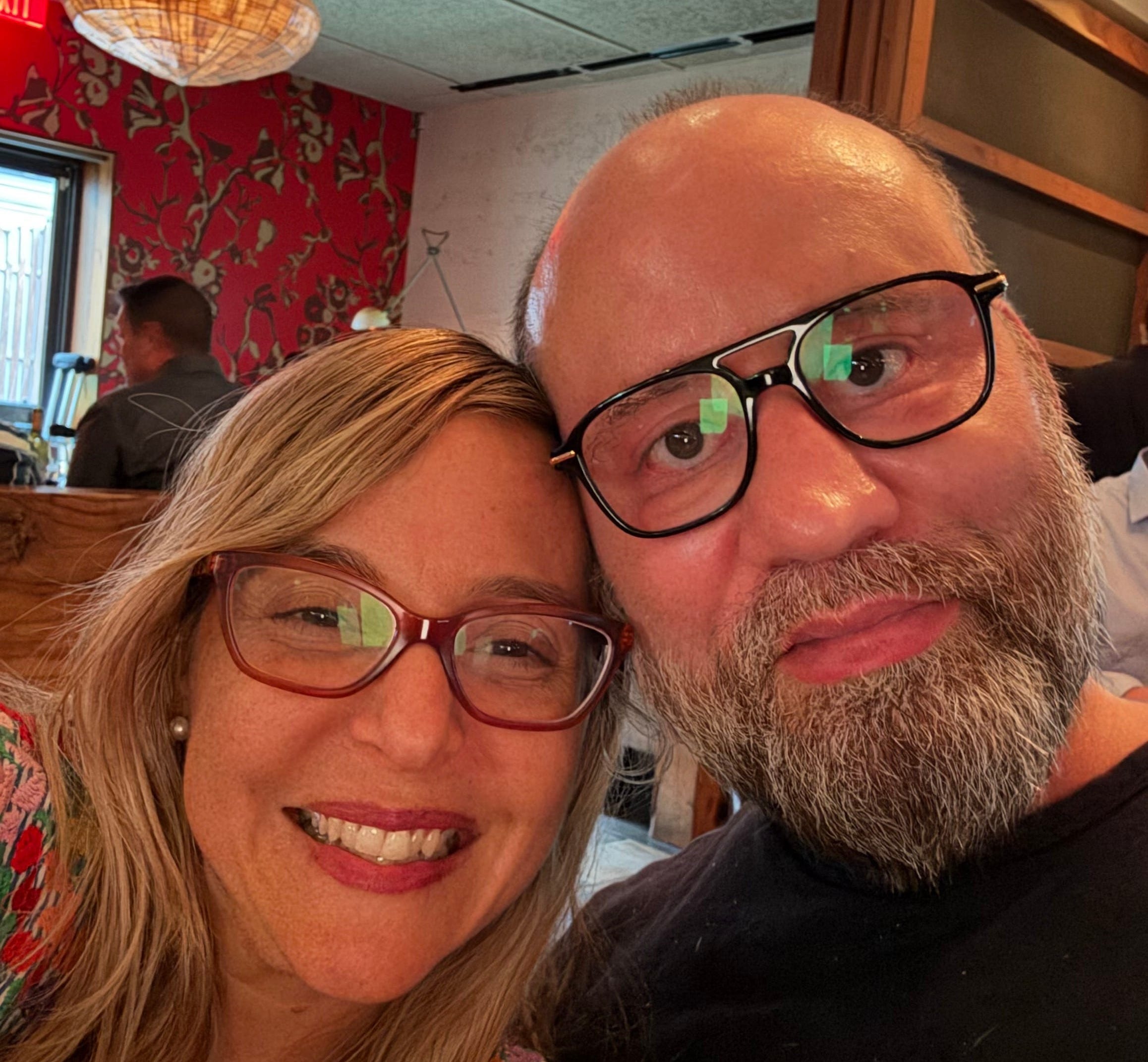
It was during their son’s childhood that David's symptoms began progressing more rapidly. Alongside earlier symptoms of muscle weakness and fatigue, David began having falls which caused major injuries including breaking his nose several times. These falls would occur both in and outside of the home and he became unable to do things like take the stairs, or ride the subway. He explains this was particularly hard as a parent of a young child.
Going back to those early years as a parent, David tells me “I remember having a dream that my legs were affected, the fear was always there but it was very subconscious.” Not wanting to admit the full extent of his deterioration, David pushed through so much of his illness progression, silently battling depression and anxiety about what would come next.
Marriage, parenting, and acceptance
The couple went on to have a second child, a daughter, now 12. David says she has no memory of her dad without his wheelchair or rollator. As their son is much older, he does remember life before David's legs became affected and he became a wheelchair user.
Despite the challenges of being a disabled person with worsening needs, David prioritises being present for his children. Now settled with his family in Austin, Texas, his son is off to culinary college soon and David and his daughter have an extremely close bond. However, he admits parenting with progressive mobility issues hasn't been easy. “I've missed out on special occasions and social gatherings because of my disability.”
When asked how David's marriage is affected by his condition he shares vulnerably that he often feels like a burden, and discusses the shame he feels around needing care to manage his daily life. “I have a lot of help,” says David, who has a personal assistant to help him at home with tasks like cooking, showering and driving.
“My wife and I communicate well which helps and ultimately we love each other, but it's not easy.”
“Everything I do requires a lot of planning, nothing is spontaneous anymore” says David. He shares feeling valued and loved, but says he acknowledges the burden of disability on his loved ones, and also himself. Admitting it’s something he’ll continue to navigate for the rest of his life. It's only in recent years that David has become more accepting of his condition, trusting he and his relationship will adapt to what comes next.
“There are limitations and losses and they're real! We spent years ignoring them and being anxious about them. Now it’s about being a lot more honest with ourselves and each other.”
I asked David if being a psychologist has helped him deal with mental health issues such as depression, anxiety and trauma, which plague so many disabled people. David says “When I think about myself being a burden I don't attribute that to other disabled people. When I feel undesirable I don't think other disabled people are undesirable, it feels easier to help others than to show self compassion”.
It's clear from our conversation that David is a passionate therapist committed to his work, but working with a disability is not without its challenges. “The work can be tiring. At the moment I front load my week in order to allow myself quieter days to rest and do things I enjoy, like writing, towards the end of the week”. David’s wife Debbie is also a psychologist.
Touching on his need to work in order to afford the care he requires David says “my wife and I are both experienced therapists with established practices, but care isn't cheap.”
According to a 2023 survey by FSHD Society the average out of pocket cost for those living with the condition in the US, was $28,600 per year. The cost overview alleges to include medical insurance, home care, transport, adaptations and both routine and non routine medical appointments—this cost has likely increased in subsequent years.
David, nor his family, have any idea what life will look like for him months or years from now, though it is likely his costs will increase as his symptoms continue to progress. Explaining the non-linear and uncertain distinction between individual people and their symptoms, David tells me “My grandmother, who also had FSHD, died in the '70s without ever having her legs affected”.
Writing and connection
David writes the substack Cracked Open, where he bravely and unapologetically shares his journey with FSHD and the mental impact living with a disability can have. His posts include themes around shame, anxiety, and personal essays exploring disability at its intersection.
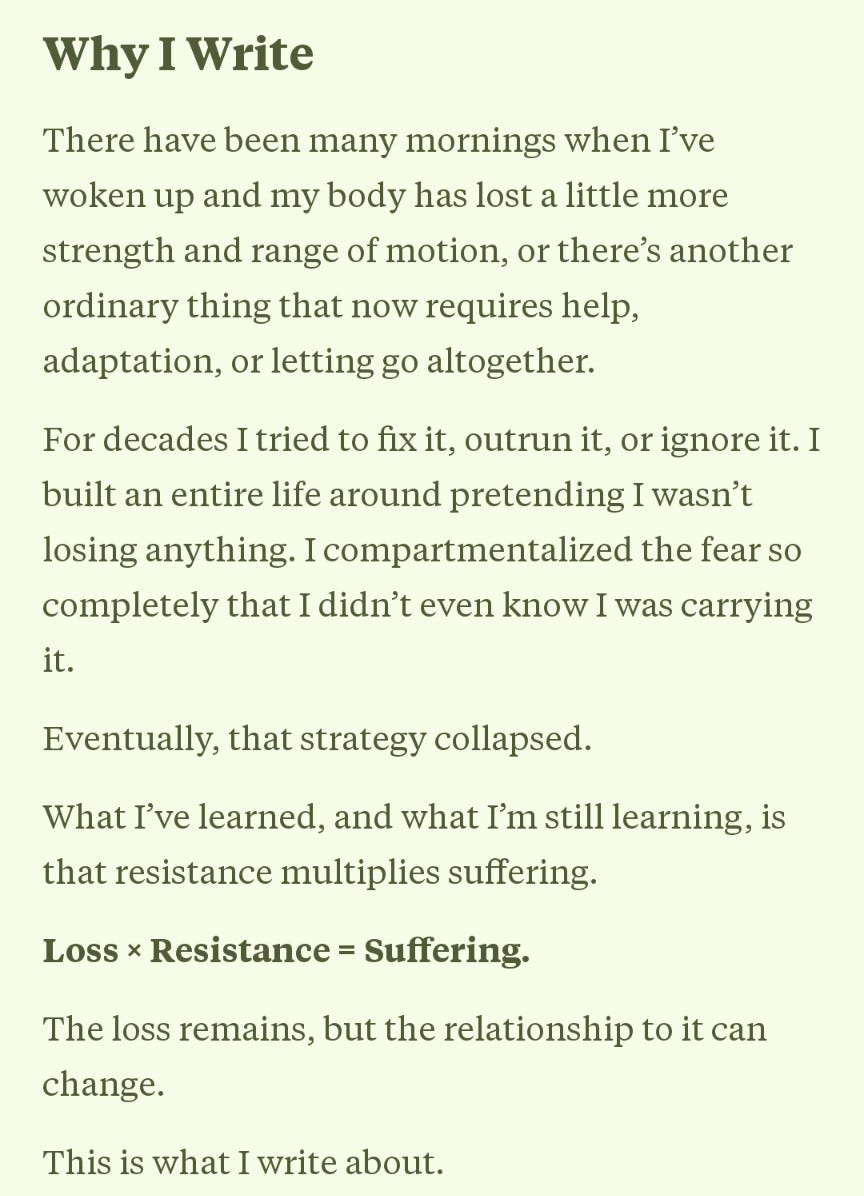
Writing on Substack has introduced him to a community of disabled people who share commonalities and personal experience, while also helping David to explore self-compassion in a way that “feels authentic.” It's now an important part of his routine with him sharing posts every Saturday, at 12 noon, CT.
“What’s really important to me in my writing is to be honest, I think it does a disservice to disabled people when we just go into toxic positivity. There’s a place for being positive but also accepting reality and adapting.”
Cracked Open provides anecdotes and insight into life with a progressive disability. Provoking the reader to remain curious, the writing is deeply emotive.
You can subscribe for free to read David’s work as he attempts to process the grief of his old abilities with the uncertainty of what his future looks like.
For an introduction to Cracked Open the below three essays are the best place to start.

https://www.ncbi.nlm.nih.gov/books/NBK1443/ Showing the gene types of FSHD and probable inheritability.
This is so good, Steph. I've been reading David's writing for a while now. It's nice to read a bit more of his story.
This is fantastic, Steph! I love your journalistic style! I’ve got no writing experience or qualifications so my interviews all go out as Q&As 😊
What a great introduction to David, his life and his Substack.
I’d be super keen to be interviewed if you’ve got room for one more..!